Selecting the right calligraphy inspired journal cover text ensures your project looks polished from the first glance. It bridges the gap between raw creativity and professional design without needing expensive software. You want something that stands out but remains readable when stacked on a shelf.
Why Hand-Lettered Styles Stand Out
This approach mimics the natural flow of a nib across paper. Unlike rigid sans-serifs, it suggests a personal touch before anyone even opens the book. Many writers find that ornate options fit better with leather bindings than modern digital templates do.
For a vintage aesthetic, exploring ornate serif fonts for vintage journals often yields a classic look. These fonts carry weight and history, making simple entries feel more significant over time.
Matching Fonts to Your Workflow
Your choice depends heavily on how you plan to use the cover. Rough cardstock requires bolder lines to remain visible after heat embossing or stamping. If you prefer precision, sharper angles work well to prevent ink bleeding on textured surfaces.
Consider minimalist decorative font pairings for journals if your layout includes complex photos or patterns nearby. Some users mix styles to create depth, using a heavy script for the title alongside a clean caption.
This contrast prevents visual clutter while maintaining artistic flair. It also balances high effort areas with calm spaces, allowing your design to breathe. Simple variations keep the focus on the content inside rather than fighting for attention.
When Geometric Meets Flow
Not every cover needs traditional curls. Modern aesthetics favor structured designs that cut through noise efficiently. An Art Deco style font for journal covers introduces sharp edges that complement smooth finishes.
This combination works well for planners or business notebooks where clarity matters most. It provides structure without stripping away all creative expression. Balancing straight lines with curved accents creates a dynamic visual rhythm.
Avoiding Common Layout Errors
Crowded lettering creates confusion rather than elegance. Leave enough white space around the text so your eyes can rest comfortably. Test print samples on scrap paper to check sizing before committing to the final material.
If letters overlap too much, reduce kerning or increase tracking slightly. Always test your chosen tool to see how ink behaves differently on various substrates. Poor contrast or low resolution images ruin otherwise good typographic choices.
Keep the color palette simple. Three tones maximum helps maintain focus on the typography itself. Mixing too many shades dilutes the impact of the script.
Your Design Checklist
- Test legibility: Is the name clear when viewed from three feet away?
- Check bleed risk: Does the ink soak into the paper unevenly?
- Verify contrast: Does the text pop against the background color?
- Review harmony: Do the initials match the overall vibe?
Start small with one page to practice spacing. Once you get the hang of scaling, expand to the full cover. Consistent results come from patience rather than perfect tools.
Learn More Minimalist Decorative Font Pairings for Journals
 Whimsical Journal Cover Lettering Styles for Decorative Fonts
 Elegant Hand-Lettered Journal Typography | Decorative Fonts Collection
 Art Deco Style Fonts for Elegant Journal Cover Designs
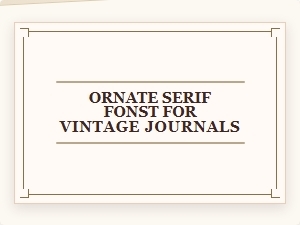 Ornate Serif Fonts That Bring Vintage Journals to Life
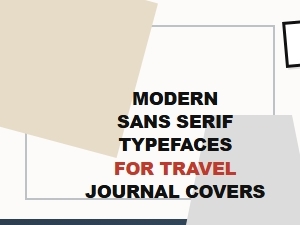 Modern Sans Serif Fonts for Travel Journals